The Laptop Scout: How Self-Taught Video Analysts Are Outpacing Professional Recruitment Departments — and Getting Hired for It

Photo: CFB ON FOX, CC BY 3.0, via Wikimedia Commons
The scouting report that changed Marcus Trevino's career did not come from a club-issued laptop or a proprietary data platform. It came from a 47-minute YouTube video he uploaded on a Tuesday night from his apartment in Austin, Texas, dissecting the defensive positioning of a second-division Brazilian midfielder that no MLS club had publicly expressed interest in.
 Photo: Austin, Texas, via citywidebuildingservices.com
Within 72 hours, the video had been shared in three separate MLS front-office WhatsApp groups. Within three weeks, Trevino had fielded calls from two sporting directors. Within two months, he was on a plane to a club's training facility for what was described, somewhat vaguely, as a "consultancy conversation."
Trevino — whose name has been changed at his request, as his current employer prefers discretion — is not an anomaly. He is, increasingly, the template.
The Information Advantage Nobody Expected
Professional football has always operated on the assumption that information asymmetry favors the institution. Clubs with bigger budgets hire more scouts, license more data, and therefore see more players than anyone operating outside the system. For most of the sport's history, that assumption was correct.
In 2026, it is crumbling.
The combination of widely available broadcast footage, accessible statistical databases, and free or low-cost video analysis tools has effectively democratized the first layer of football scouting. Leagues that were once invisible to North American audiences — the Brazilian Série B, the Polish Ekstraklasa, the Thai League 1 — now have substantial footage libraries on YouTube, Wyscout highlight compilations on social media, and FBref statistical profiles that any motivated analyst can interrogate for free.
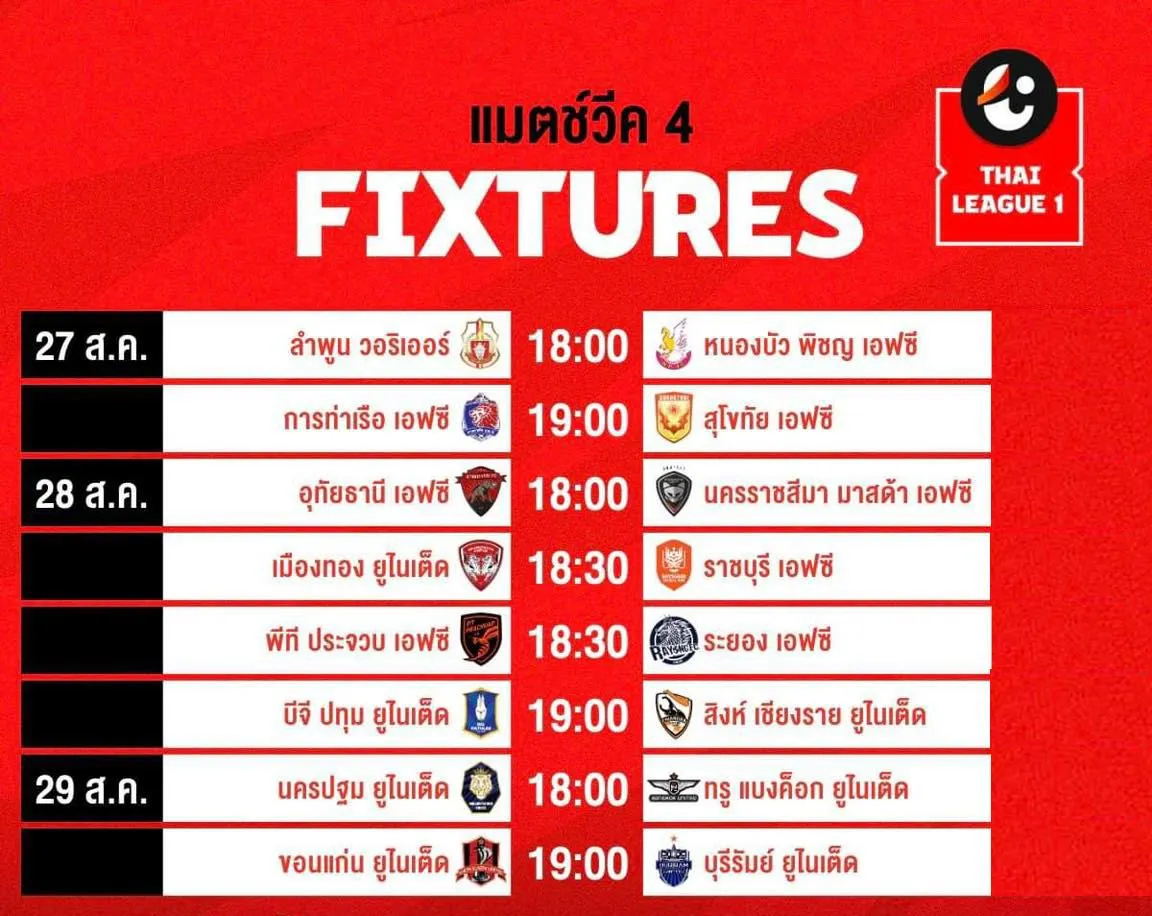 Photo: Thai League 1, via img.pptvhd36.com
 Photo: Brazilian Série B, via focalizando.com.br
The result is a growing cohort of independent analysts who, unburdened by institutional bias, geographic limitations, or the organizational pressure to justify existing recruitment pipelines, are identifying players that professional departments are missing — or identifying them significantly earlier.
"The traditional scouting model has a built-in lag," explains one MLS recruitment coordinator who has worked alongside several self-taught analysts in recent years. "A scout gets assigned a region, watches the games they're told to watch, and reports back. There's no incentive to go looking somewhere nobody asked you to look. These independent guys have zero constraints. They follow the data wherever it points."
The Tools of the Trade
The toolkit being used by the most effective independent analysts in 2026 is more sophisticated than most club executives realize — and far cheaper than the platforms those same clubs are paying six figures to license.
FBref and Sofascore provide deep statistical profiles at no cost. Wyscout and InStat, while subscription-based, are accessible at price points well within reach of a motivated individual. SciSports and similar expected-metrics platforms have released public-facing dashboards that, while less granular than their enterprise products, offer genuine analytical value.
On the video side, YouTube remains the single most powerful free resource in the independent analyst's arsenal. Dozens of channels now compile full-match footage, positional highlights, and tactical clips from leagues across six continents. A skilled analyst with clear search methodology can build a comprehensive visual profile of a second-tier player in a matter of hours.
The analysts who are genuinely beating professional departments are not simply watching more footage. They are applying structured analytical frameworks — often borrowed from academic sports science literature or adapted from NFL and NBA analytical traditions that are more advanced than their soccer equivalents — to generate insights that raw observation misses.
The Viral-to-Hired Pipeline
What makes the current moment genuinely unprecedented is not just that independent analysts are doing good work. It is that social media has created a visible, verifiable portfolio system that allows clubs to evaluate that work before making any hiring commitment.
A well-constructed breakdown video — one that identifies a player, explains the analytical case for their signing, and demonstrates tactical literacy — functions simultaneously as a piece of content and as a job application. When that video finds an audience within football's professional community, the analyst's credibility is established in a way that a traditional resume never could.
Multiple MLS clubs have now made formal or informal hires directly traceable to social media content. The pattern is consistent: an independent analyst publishes a breakdown, the video circulates in club channels, a sporting director or head of recruitment makes contact, and a formal or consultancy relationship follows.
One sporting director at a Western Conference club described the process with characteristic bluntness: "If someone has already done the work and put it out publicly, and it's good work, why would I not talk to them? I'm not paying for a degree. I'm paying for the analysis."
What This Reveals About Traditional Scouting
The rise of the laptop scout is, at its core, a story about institutional failure as much as individual ingenuity. The fact that self-taught analysts operating without budgets, without access to proprietary data, and without institutional support are consistently identifying targets that professional departments miss points to structural problems in how American clubs approach recruitment.
Those problems are not primarily financial. Several MLS clubs spend substantial sums on scouting infrastructure. The issue is organizational. Traditional scouting departments are often siloed from analytics teams, geographically constrained by scout assignments, and culturally resistant to the kind of cross-league, data-first prospecting that independent analysts practice as a matter of course.
In a transfer market that has grown exponentially more competitive in the post-2026 World Cup environment, that organizational conservatism is increasingly costly. The clubs that are moving fastest to integrate independent analytical talent into their recruitment structures are not doing so out of sentiment. They are doing so because the results are measurable.
The Verdict
The laptop scout is not a curiosity or a social media trend. They are a genuine competitive variable in the 2026 transfer market — and the MLS clubs that recognize that earliest will carry a meaningful advantage into every window that follows.